




Description
Lecture: “Pyro-climates: how climate change is reshaping fire risk”, Wednesday 29 July, 6.00 pm, by Adam Ali.
Alain Guille Amphitheatre at the Banyuls Oceanographic Observatory, free admission.
Abstract
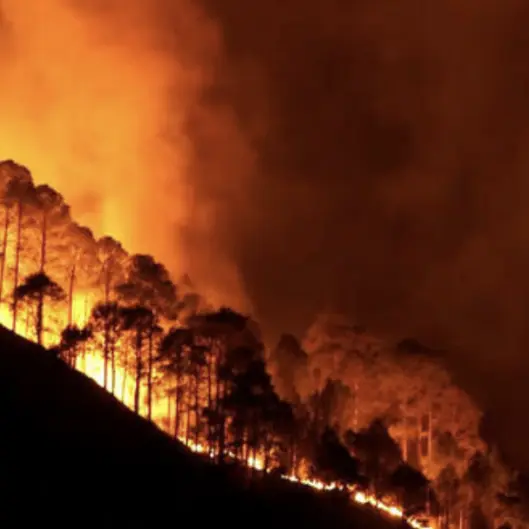
Climate change is profoundly altering the conditions conducive to wildfires: more frequent heatwaves, prolonged droughts, more flammable vegetation and longer high-risk seasons. In the Mediterranean, as well as in other regions of Europe and the world, fire is thus becoming a visible indicator of the ongoing climate upheavals.
However, the risk of wildfires does not depend solely on the climate. It also stems from the history of landscapes, changes in forests, the abandonment or transformation of certain agricultural practices, urbanisation and the way we manage our land. Understanding fires therefore requires bringing together multiple perspectives: those of climatologists, ecologists, geographers and foresters, but also those of local residents and stakeholders.
Through this public lecture, we will explore how research helps us better understand the fires of the past, present and future. Natural archives — such as charcoal preserved in sediments or fossilised pollen — provide insights into past fires and how landscapes have responded to climate variations. Current observations and models, meanwhile, enable us to anticipate possible trends in fire risk over the coming decades.
The aim is not to give in to doomsday scenarios, but to better understand the mechanisms at work so that we can prepare more effectively. How is climate change reshaping the geography of fire? Which areas are becoming more vulnerable? How can we adapt our landscapes, practices and prevention policies? This lecture will offer insights into rethinking our relationship with fire, the climate and the lands we inhabit.
Biography: Adam Ali
For the past fifteen years or so, my research has focused primarily on characterising the long-term (multi-century) functioning of boreal ecosystems. The boreal forest is one of the largest forest regions on the planet, comprising over a billion hectares of forest that encircles the Northern Hemisphere from the Atlantic Ocean to the Pacific, at the Arctic Circle. It plays a fundamental role in the planet’s climate balance, notably as the largest terrestrial carbon sink, with carbon accumulated mainly in peatlands dating back several millennia. Consequently, forest fires are one of the major disturbances that shape the landscapes of the boreal forest. One of the objectives of my research is to characterise the natural variability of fire disturbance regimes in the context of ongoing climate change. To this end, I draw on the tools and approaches of palaeoecology. I am carrying out this research within the IRN (International Research Network) Cold Forests. Our consortium brings together researchers from Canada, Russia, Scandinavia and France. The IRN also provides training for Master’s and PhD students in forest ecology and biodiversity management, based in particular on numerous advanced training placements within the consortium.